The 90-Day GTM Sprint: A Week-by-Week Plan from Unclear Strategy to Working Growth Engine
A complete 13-week go-to-market sprint for B2B SaaS and services teams: what to do each week, which two channels to build, the metrics and operating rhythm that keep it honest, the experiment template, and the risks that derail most plans.
By Alexandre Contador, Fractional CGO & GTM Advisor
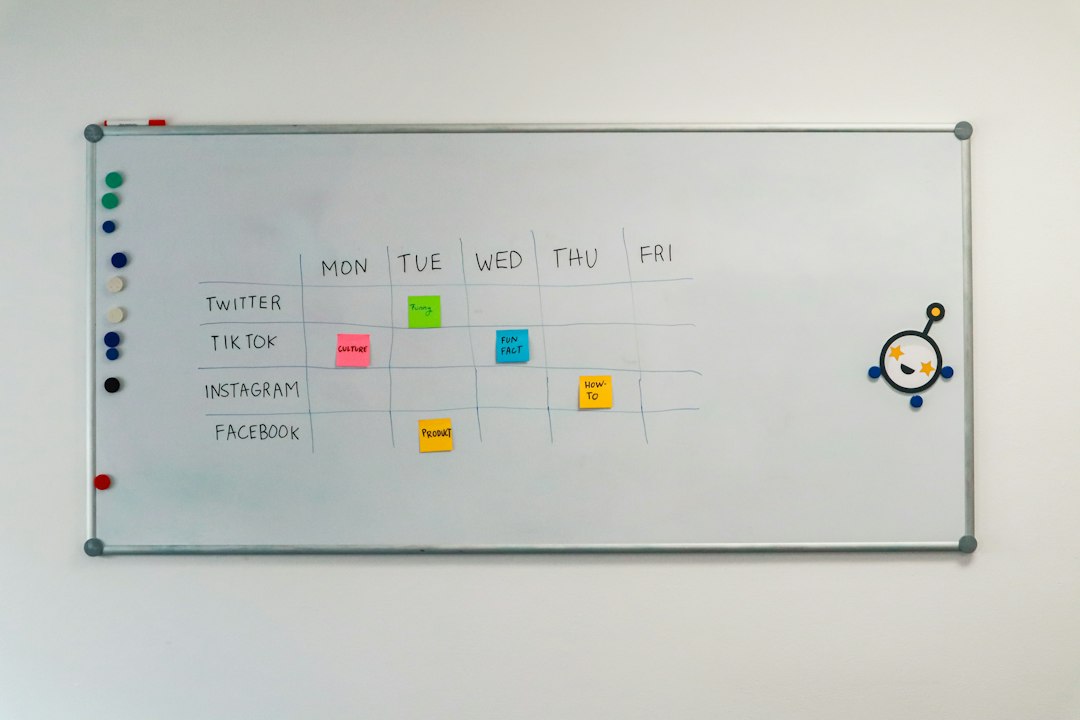
Most go-to-market plans fail before they start. Not because of budget, and not because of headcount — because nobody can say, in one sentence, exactly who the product is for, which two channels will reach them and what number will prove it's working by the end of the quarter.
A 90-day sprint fixes that by forcing a sequence. First diagnose and define, then measure, then build two channels, then scale what works — with a weekly rhythm that keeps the team honest. This guide walks through all 13 weeks, with deliverables, templates and the traps to avoid. It's the long-form version of the free 90-Day GTM Sprint Plan.
Who this is for (and who it isn't)
This plan fits B2B SaaS and services teams of about 1 to 30 people who have shown some pull — paying customers, a pipeline of conversations, a product people use — but can't yet answer "where does the next customer come from, and how much will it cost?"
It's not the right tool if you haven't found any product-market signal (you need customer discovery first), or if you're a large organisation with multiple business units (you need a programme, not a sprint). If you're unsure where you stand, run the free GTM readiness score before committing a quarter to anything.
The plan at a glance
Source: Growth with Alex — 90-Day GTM Sprint Plan
| Phase | Weeks | Purpose | Key output |
|---|---|---|---|
| 1. Foundation | 1–3 | Understand reality; define who and what; instrument the funnel | Diagnosis, ICP doc, positioning canvas, dashboard |
| 2. Build channels | 4–8 | Launch two channels and learn which has signal | Two live channels, mid-sprint decision |
| 3. Scale what works | 9–13 | Improve conversion, add automation, hand off sales, plan the next 90 days | Results doc and next-quarter plan |
Phase 1: Foundation (weeks 1–3)
Week 1 — Diagnose
The aim is to find the three biggest leaks in the current go-to-market, using evidence rather than opinion.
- Pull the last 12 months of revenue by customer, channel and segment.
- Interview 5–8 of your best customers and 3 lost deals. Ask what they were trying to do, what else they considered, why they chose (or didn't choose) you, and the exact words they used to describe the problem.
- Audit the funnel end to end: traffic → lead → opportunity → close → retain, with conversion rates between each step.
- Output: a one-page diagnosis listing the three biggest leaks.
Tip: look for revenue concentration. If 70% of revenue comes from one segment, that's an ICP signal, not a coincidence.
Week 2 — ICP and positioning
- Define your ICP from actual best customers, not aspirations: firmographics, trigger events, the buying committee and the problem urgency. The complete ICP framework and the free Find your ICP sheet walk through it.
- Write the positioning statement using the positioning framework: target customer, category, key benefit, differentiator and proof. Avoid the positioning mistakes that kill conversion.
- Output: ICP document, positioning canvas and three messaging pillars.
Week 3 — Measurement
Without measurement, the next ten weeks are guesses.
- Set up UTM rules, CRM stages, a source field on every record and a weekly dashboard.
- Define one north-star metric and five input metrics that drive it.
- Output: a working dashboard and written metric definitions everyone agrees on.
For metric definitions and thresholds, see GTM metrics every B2B SaaS founder should track and the CAC payback guide.
Phase 2: Build channels (weeks 4–8)
Pick two channels from this list: outbound, LinkedIn content, SEO/AEO, paid, partnerships, community and product-led.
How to choose your two channels
Score every candidate 1–5 on four factors, then pick the top two that are meaningfully different from each other:
| Factor | Question |
|---|---|
| Where your ICP is | Do your buyers actually spend time or search here? |
| Speed to signal | Will you know within 3–4 weeks if it works? |
| Your strengths | Do you already have the skills, assets or audience? |
| Cost | Can you test properly within budget and headcount? |
A common, effective pairing is one fast-signal channel (outbound or paid) plus one compounding channel (content, SEO/AEO or community). Our ranking of B2B SaaS channels by ROI is a useful input.
Weeks 4–5 — Launch channel A
- Build the assets: offer, landing page, and the sequences or content system.
- Soft launch at small volume to catch errors before you scale.
- Output: a live channel and two weeks of data.
Weeks 6–7 — Launch channel B
- Same pattern, different channel. Reuse the ICP, messaging and measurement from channel A.
- Output: a second live channel.
Week 8 — Mid-sprint review
The most important meeting of the sprint.
- Which channel has signal? Kill, fix or scale each one, with a written reason.
- Update ICP and messaging using real replies, objections and conversion data, not the week-2 assumptions.
- Decide what the second half of the sprint will emphasise.
Phase 3: Scale what works (weeks 9–13)
Weeks 9–10 — Optimise conversion
Fix the highest-leverage step in the funnel — typically the landing page, demo flow, onboarding or trial.
- Run 3–5 experiments with explicit hypotheses (template below).
- Prioritise by expected impact × confidence ÷ effort.
- If you run a product-led motion, the PLG activation guide lists 16 nudges to test.
Week 11 — Add automation
Automate only what is already working manually.
- Lead routing, enrichment, follow-ups, reporting.
- Document every playbook so the system survives you.
- For patterns and guardrails, see agentic GTM workflows and GTM engineering.
Week 12 — Sales and handoff
- Qualification criteria that tie to the ICP.
- A call script and objection library built from real calls.
- Case studies and proof points from your best customers.
- An SLA of under one hour on inbound leads.
Week 13 — Review and plan the next 90
- Compare results to the goals set in week 1.
- Decide what to double down on, stop and start.
- Output: a 90-day results document and next-quarter plan.
The weekly operating rhythm
A sprint works because of cadence. The default rhythm:
| Day | Meeting or task | Time |
|---|---|---|
| Mon | Pipeline and metrics review | 45 min |
| Tue | Channel A deep work | Block |
| Wed | Channel B deep work | Block |
| Thu | Customer calls (2–3) | Block |
| Fri | Experiment review; plan next week | Light day |
Customer calls every week matter more than they feel like they do: they keep messaging honest and feed the experiment backlog.
Targets to set on day one
Write a baseline and a target for each before week 1 ends:
| Metric | Define |
|---|---|
| Qualified pipeline created | per week |
| Meetings booked | per week |
| Win rate | % |
| CAC and payback | months |
| Activation or trial-to-paid | % |
Use the CAC payback calculator and the marketing budget calculator to sanity-check what's achievable with your budget.
The experiment template
Every test uses the same four lines:
- Hypothesis: If we [change], then [metric] will [move] because [reason].
- Test: what, who, how long, sample size.
- Success rule: decided before the test starts.
- Result and next step: what we learned and what we do next.
Deciding the success rule in advance prevents the most common failure in growth teams: rationalising a mediocre result after the fact. For more structure see the growth tactics that work for B2B SaaS.
Risks and fixes
| Risk | Why it hurts | Fix |
|---|---|---|
| Too many channels | Thin data on everything | Maximum two until one works |
| Vague ICP | Messaging that fits no one | Re-interview customers; narrow the segment |
| No data | Decisions based on opinion | Fix tracking first (week 3) |
| Slow follow-up | Warm leads go cold | SLA under one hour for inbound |
| Founder dependency | Nothing runs without one person | Document every playbook |
| Sprint becomes a to-do list | Activity without learning | End each week with decisions, not tasks |
Using Claude to run the sprint
AI doesn't replace judgement, but it removes admin. Two prompts worth saving:
Plan generation:
Here's our company context [paste]. Create a 13-week GTM sprint plan with weekly goals, owners, deliverables and metrics. Flag dependencies and the 5 riskiest assumptions.
Friday review:
Every Friday, summarise this week's pipeline, channel metrics and experiments. Compare against targets and suggest next week's top 3 priorities.
Connect your CRM and analytics through connectors (see MCP for marketers) so the Friday review pulls real numbers. Anthropic's guidance on agents advises starting with the simplest solution — a scheduled summary prompt is exactly that.
What "done" looks like on day 90
A good sprint ends with artefacts, not just momentum:
- A one-page ICP and positioning canvas people actually use.
- A dashboard reviewed every Monday.
- Two channels with 8–10 weeks of data and a documented decision: scale, fix or stop.
- Playbooks for lead handling, qualification and follow-up.
- A prioritised backlog of experiments.
- A next-quarter plan with targets drawn from real conversion data.
What to read next
- How to build a GTM strategy from scratch for the strategic layer behind the sprint.
- GTM frameworks every growth leader should know.
- The $0 → $1M ARR tech stack to equip each phase.
- Free checklists: GTM Checklist and the 90-Day GTM Sprint Plan.
- Browse the full GTM topic hub.
Frequently asked questions
A 90-day GTM sprint is a time-boxed, 13-week programme that takes a company from an unclear go-to-market to a working one: a defined ICP and positioning, two repeatable acquisition channels, a measured funnel and a weekly operating rhythm the team can run without outside help.
B2B SaaS and services teams of roughly 1 to 30 people that have some product-market signal but no repeatable way of generating pipeline. Adjust the weeks to your reality; the sequence — diagnose, define, measure, build channels, then scale — matters more than the exact calendar.
Spreading a small team across four or five channels produces thin data on all of them. Two channels give you enough focus to learn what works, and a second option if the first saturates. Add a third only after one channel is reliably producing qualified pipeline.
Fix tracking first. Set up UTM rules, CRM stages, a source field and a weekly dashboard in week 3, then lean on customer and lost-deal interviews in week 1 for qualitative evidence until the numbers accumulate.
An annual plan sets direction; a sprint tests it quickly. Ninety days is long enough to see signal from a channel and short enough to change course. Many teams run a sprint first, then write the annual plan using what the sprint taught them.
Free resources & related work
Want a second opinion on your GTM?
30 minutes, no pitch — just a direct conversation.
Next in Go-to-Market
GTM Engineering: The Complete Guide to the Role, the Stack and the Operating Model
What GTM engineering is, how it differs from RevOps and marketing ops, what the job-posting data says about the role, the core stack and workflows, and how to decide whether to hire one, outsource it or build the capability with AI agents.
Keep reading
All Go-to-Market guides →
GTM Engineering: The Complete Guide to the Role, the Stack and the Operating Model
What GTM engineering is, how it differs from RevOps and marketing ops, what the job-posting data says about the role, the core stack and workflows, and how to decide whether to hire one, outsource it or build the capability with AI agents.
The Ultimate Guide to Scaling From €1M to €10M ARR
The GTM playbook doesn't stay the same from €1M to €10M ARR — it has to evolve through at least three distinct phases. Here's what changes, and when.
How to Write B2B SaaS Positioning That Converts: A Step-by-Step Guide
A step-by-step process for writing B2B SaaS positioning that actually moves conversion — not just a nicer headline, but a real strategic foundation underneath it.